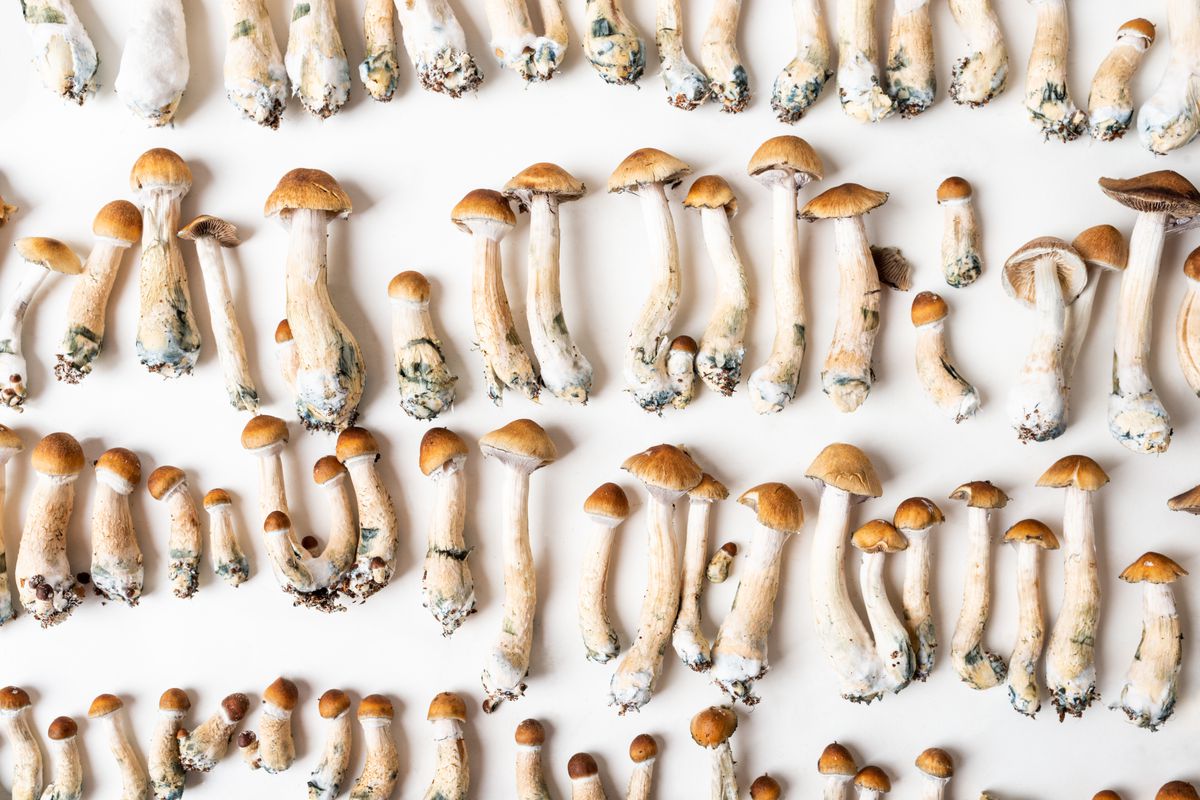
Cultivated vs. wildcrafted: why I choose cultivated (consistency, safety, potency)
I prefer cultivated mushrooms for three reasons: consistency in potency, far lower risk of contamination, and control over food-pathogen exposure. My batches are harvested at the same stage before the veil breaks, every fruit is visually inspected, and I backstop that with microbiological testing. I'm picky with substrate inputs too—high-quality, clean raw materials, and nothing that could carry pesticides or other contaminants.
Moreover, many of the cultivated genotypes/strains (cultivars) nowadays are bred for higher potency. So, if you haven't taken them in many years (10+), or are using new cultivars, they are likely double or triple the potency. That 1/8th that you took back in the day is just as potent as 1g of mushrooms from current cultivars.
Wild mushrooms add two big risks. First is misidentification—please never eat anything you can't identify with 100% confidence. Mushroom mistakes can be fatal. Second is species-specific stuff you don't want to learn the hard way. Wood-loving species (historically called Psilocybe azurescens, cyanescens, subaeruginosa, bohemica, arcana, serbica, and allenii) have been associated with "wood-lover's paralysis" (WLP): transient but frightening weakness, trouble swallowing, and shortness of breath. I say "historically" because some mycologists have been theorizing that P. cyanescens, alenii, azurescens, etc. all are the same species but have different traits given their environment – something called imprinting from epigenetics. If you're new, indoor-grown P. cubensis is a safer, saner starting point.
Two parting lines on this: don't forage what you can't 100% ID on your own, and assume variability outdoors is the rule, not the exception.
The chemistry & pharmacokinetics: what these tryptamines actually do in your body
Let's go deep.
From psilocybin to psilocin (and beyond).
Psilocybin itself is a prodrug. After you swallow it, your body dephosphorylates it to psilocin—the molecule that crosses the blood–brain barrier and does the subjective heavy lifting. Peak psilocin levels after oral dosing are usually about ~1–3 hours in (most studies cluster around ~2 h), with extensive glucuronidation (phase-II metabolism) to psilocin-O-glucuronide and smaller MAO-mediated pathways to 4-HIAA/4-HTOL. UGT1A10 and UGT1A9 are major players in that glucuronidation story.
Receptors and "why you trip."
Psilocin binds several serotonin receptors, but the 5-HT2A receptor is the headliner for psychedelic effects. It also touches 5-HT1A and 5-HT2C, among others—part of why the experience has emotional, cognitive, and sensory layers. Newer work highlights "functional selectivity" (AKA biased agonism): different psychedelics can tug different 5-HT2A signaling pathways, which might explain why psilocin doesn't feel like LSD or 5-MeO-DMT even though they share a "serotonergic psychedelic" badge.
Your body naturally produces serotonin to create a sense of euphoria during emotionally heavy life events. You also produce DMT in small amounts while you sleep and when you die, which is why it's so profound. Psilocin, is very similar to DMT, as you can see above, in terms of its function and how it locks into your 5-HT receptors.
Other drugs that touch on multiple receptors, like LSD, are often considered "dirty drugs" because the pathway isn't discrete, but rather signals with multiple receptors.
How psilocin differs from LSD.
Orally, LSD reaches peak plasma ~1.5 h and has a plasma half-life of ≈ 3 h—yet the trip commonly lasts 8–12 h. That mismatch is likely due to slow receptor off-rates (LSD "lingers" at 5-HT2A; the receptor's extracellular "lid" helps trap it), plus LSD's broader receptorome. Touching on multiple receptors, the "lingering" effect that it portrays is not just when it hits 5-HT2A, but many more receptors. Psilocin's half-life is similar or shorter, but its receptor residence appears shorter—hence a shorter experience.

DMT vs. psilocin (and tryptophan basics).
Psilocin and DMT are chemical cousins. The practical difference: DMT is rapidly broken down by MAO-A; orally it's inactive unless you pair it with MAO inhibition (think ayahuasca). Psilocin sticks around long enough orally without that. Also, despite a common myth, your body does not make tryptophan; it's an essential amino acid you must eat. Your body turns tryptophan into serotonin and eventually melatonin via well-mapped pathways.
Baeocystin & norbaeocystin: the "supporting cast."
My read—and my experience—is that these minor tryptamines contribute synergistically rather than driving the bus. Without them, trips often feel "thinner," less body-full; think "full-body high experience". The evidence is still early: animal and receptor studies suggest baeocystin by itself is weak, while its dephosphorylated relative (norpsilocin) can be potent at 5-HT2A. Bottom line: whole mushrooms bring a broader alkaloid/polyphenol entourage than isolated psilocin, and that can matter.
When I've taken pure psilocin, onset is faster and more "head/visual" heavy—a buzzy, high-vibe clarity. Whole mushrooms ramp slower and produce a richer body experience, which I chalk up to the ensemble of other compounds aboard. I believe in the synergistic effects of psilocybe mushrooms, and that one should take the whole mushroom, not just isolated compounds. Evidence is early, but receptor work shows norpsilocin is a potent 5-HT2A agonist even if baeocystin alone looks weak in animal proxies; so "supporting cast" fits what we both observe.
How psilocin differs from ibogaine.
Ibogaine is a different beast: it's CYP2D6-metabolized to noribogaine, which sticks around much longer (human noribogaine half-life of ~28–49 h), helping explain multi-day after-effects. Both ibogaine and noribogaine can prolong QTc (via hERG K⁺ channel inhibition), raising torsades risk—one reason clinical ibogaine requires cardiac screening/monitoring. In laymen terms, this basically means your excited nervous system during prolonged use with a long half-life of ibogaine, can result in heart problems. Psilocin doesn't carry this characteristic cardiac risk profile.
A note on tryptophan.
I'll say it again; tryptophan isn't produced endogenously, it's diet-essential in humans. From dietary tryptophan you get serotonin/melatonin; psilocin is a structural cousin (4-HO-DMT), not a product of our endogenous pathway.
Mushrooms are a tool, not a cure: therapy, sleep, journaling, and "doing the work"
The clinical work that first sold me on the potential was led by Dr. Anthony Bossis and colleagues at NYU (and parallel work at Hopkins). I had the wonderful opportunity to listen to Dr. Bossis speak at a TedX event in 2017. In people with life-threatening cancer, one supported psilocybin session often moved folks from dread and isolation to connection and acceptance—wanting to be with loved ones and live fully with the time they had That signal was large and durable in 2016 trials.
But even in those studies, the medicine wasn't doing it alone—therapy, preparation, and integration were integral. Tools I recommend (with or without mushrooms):
- Journaling (pattern recognition over time; you'll see your mind shift on the page).
- Sleep (under- or over-sleeping wrecks mood and cognition; start with basic sleep hygiene).
- Acceptance (radical acceptance doesn't mean passivity; it frees capacity to act where you do have agency).
- Breathwork (down-regulates panic, creates space between trigger and response).
- Movement (stabilizes serotonin/dopamine tone; shifts attention into the body).
If you've got other tools, drop them in the comments—this toolbox is communal.
Don't dose in a vulnerable state (here's what I flag)
If you or someone you love is riding any of these, hit pause: huge mood swings (euphoria to tears in an hour), manic episodes, confusion about where you are, self-harm or suicidal ideation, panic attacks, delusions of grandeur, derealization, or unrelenting anxiety spirals.
If you ignore that advice (I wish you wouldn't), have a sober, trusted tripsitter. When things tilt negative, create a state shift: change rooms, step outside to cool air, or tuck into a cozy nest. Showers or baths can reset the nervous system (no swimming). Cool and warm are great tools to snap someone back to the present moment, but also regulate the body's temperature when independent regulation cannot control the body's functions. Nausea? Use the toilet; it happens. Sometimes you just have to poop too, and that can feel uncomfortable. A small snack—especially citrus or juicy fruit—can snap attention back into the present and uplift one's energy. And music… curate multiple playlists for different moods—because each one is a vibe.
If someone proceeds against that advice to pause, make it as safe as possible:
- Tripsitter: a sober, trusted adult who can help redirect and de-escalate as directed above.
- Daylight, calm space, exit ramps: have multiple zones (fresh air, cozy nook, quiet room), privacy, and a way to change temperature/posture quickly.
- Change the channel: move rooms, sit/stand, shower or bath (no swimming), cool down if overheated, warm up if chilled. A small snack—citrus or juicy fruit—can re-anchor attention in the senses.
- Sound: pre-curate playlists for different moods; if the music isn't helping, change it.
States like active psychosis or recent lithium use are disqualifiers in regulated settings for a reason; Oregon's rules literally write these screens into the service model. If you're seeing warning signs, stop and seek clinical support.
The Missing Net: Why People with Mental Illness Are Left Exposed
Here's the hard truth I keep coming back to: the people most likely to be harmed by psychedelics—the folks with a personal or first-degree family history of psychosis or bipolar spectrum disorders—are the least served by today's patchwork of "support." Clinical trials largely exclude them, so our evidence base doesn't tell us how to help when things go sideways in real life. And outside of research, the public systems we do have aren't built for psychedelic-specific crises. That's a dangerous mismatch.
Look at who gets screened out. Modern psilocybin trials commonly exclude people with bipolar disorder or even a family history of it; cancer-anxiety and depression studies have also excluded participants with personal or immediate family histories of schizophrenia or bipolar disorder. That is a sensible safety choice inside a trial—but it means the "success rates" people quote often don't apply to higher-risk populations considering use in the wild.
Even the state-regulated "adult-use with support" models acknowledge this risk: Oregon's program deems clients ineligible if they have active psychosis, ideation of harm, or lithium use within 30 days (lithium + classic psychedelics has a seizure signal). Again, that's good gatekeeping—but it also means the very people who might wander into psychedelics seeking relief are told "no," without a robust, clinical alternative pathway.
Are there peer supports? Yes—brave, compassionate ones. Fireside Project runs a free psychedelic peer-support line; Zendo Project provides trained volunteers at events and shares educational materials. These services save people from panicking alone, and that matters. But they're not emergency psychiatry, they're not 24/7 everywhere, and they don't integrate you into a local care team for sub-acute follow-up if you tip into mania or a psychotic break. In other words, they're good pieces—not a net.
Meanwhile, the general crisis system (the 988 Suicide & Crisis Lifeline, ERs, law enforcement) wasn't designed around psychedelic pharmacology or the specific ways suggestibility, sleep-loss, stimulants, and serotonergic meds interact with these states. Coverage and training vary widely by state; answer rates and handoffs are improving but uneven. Front-line responders do heroic work, but there isn't a standardized, psychedelic-informed pipeline from that first call to safe, trauma-informed stabilization and structured integration afterward.
Why am I so insistent here? Because cases do happen—manic switches and psychotic episodes after psilocybin are rare, but real, especially in people with bipolar vulnerability. When that switch flips outside a clinic, families are left improvising in kitchens and living rooms—and the next stop is often an ER or a jail cell, neither of which is set up for calm, sustained integration care.
So what would an actual support net look like?
-
Upstream screening + warm handoffs. If a licensed facilitator or community guide screens someone out (e.g., bipolar I history, recent mania, lithium), there should be a standard referral ladder: rapid-access psychiatry, sleep stabilization, and evidence-based therapy—not "good luck." Oregon's screens are a start; the handoff infrastructure is the missing half.
-
Psychedelic-informed crisis playbooks. 988/EMS/ER teams need simple, shared algorithms for suspected psychedelic-related crises: environmental de-escalation first; medication cautions (e.g., lithium history); and trauma-informed containment—paired with training refreshers (think CIT 2.0 for altered states). (Right now this is uneven; we should make it boringly standard.)
-
Sub-acute aftercare. Automatic follow-ups within 24–72 hours, then 1–2 integration sessions over 30 days, even if the person never returns to psychedelics. That's where stabilization happens.
-
Adverse-event reporting that actually learns. A de-identified registry for non-clinical settings (service centers, retreats, community groups) so we stop arguing from vibes and start steering from data.
-
Clear public guidance. "Who should not use psychedelics," written in everyday language and everywhere they might look, paired with real alternatives (sleep clinics, mood-disorder programs, therapy options).
-
Equity and access. People most at risk are often least connected to specialty mental-health care. Sliding-scale integration clinics and multilingual materials are not luxuries; they're core safety features.
-
Harm-reduction you can actually find. Peer lines like Fireside should be widely publicized; ERs should have those numbers taped to triage desks—and those teams should know each other by name.
Zooming out, remember we already face a global mental-health treatment gap: even for depression and severe mental illness, huge portions of the public never receive adequate care. Layer psychedelics on top of that, and the "lack of a net" stops being a metaphor. It's the reality people are stepping into.
My position, as plainly as I can put it: legalization without infrastructure is access without safety. Until we build screening, crisis response, clinical handoffs, and integration that include—rather than exclude—those with psychosis and bipolar vulnerability, we're outsourcing risk to families and first responders. I'm pro-access and pro-safety. Those two must rise together, or we're scaling harm faster than healing.
Set & setting—how I prepare, physically and socially
Preparation is medicine.
This is my checklist for making sure that everything is easeful, not rushed, and I can move without friction.
-
Day-of care: shower, bathroom, maybe shave if that's your thing. Eat a hearty, balanced meal with lots of protein and fat, and some fresh veg/fruit for long-burn energy.
-
Media diet: less in the beginning, don't be doom scrolling when you wake up; on the way down, a chill movie or nature doc is perfect.
-
Clear the schedule: nothing critical after, don't be booking business meetings or family gatherings for after your journey. Integration is not optional.
-
Intention: speak it out loud. "I want to reflect on X," "I want to practice moving/dancing," "I want to tell my partner I love them." Don't bottle it up.
-
Food and drinks: plan ahead and shop for some healthy snacks and drinks to enjoy. Nothing is more refreshing than chilled beverages on a hot day, or a warm drink when it's chilly out. Fresh fruit is one of my favorite things to have on hand, dried fruit is the next best thing. It's like nature's candy!
-
People & places: be with folks you trust. Have multiple zones (chill corner, outdoor nook, playful space, hot/cool areas). Privacy matters—you might want no clothes for a while. Make moving between zones safe, if you have to travel, limit it to walking and have a sober person lead the way.
-
Stacking substances: please don't. Some have negative impacts, others amplify the effects. Cannabis has positive synergistic effects, so consumption is recommended after the peak, but it can be intense; be prepared. Save doom-scrolling for the credits.

Big-dose epiphany vs. microdosing: different tools, different jobs
A first large dose can feel like stepping outside your life to see the map: maybe you realize something has to change now; maybe grief finally lands and releases; maybe you just need a haircut and a job. The hard part is after: if you don't follow through, a post-glow dip can feel empty. So, write it down. Commit lightly (don't over-promise). Re-check a week later; sometimes a "huge insight" becomes "lol I was high."
Microdosing doesn't slam your life into a new lane; it's quieter. Over a few weeks I notice focus, clarity, energy, and an easier time doing what actually matters to me. Great for language learning, skill acquisition, and stuck problems—if you keep doses sub-perceptual.
Medication caveats.
SSRIs/SNRIs can blunt psychedelic effects in many (not all) folks; antipsychotics tend to block them. Lithium is a red-flag interaction with classic psychedelics—seizure risk looks meaningfully elevated in the community data; it's the one drug Oregon and Colorado specifically call out. If you're on meds, talk to your prescriber, not the internet.
Substances to avoid with psilocybin (non-exhaustive, harm-reduction lens):
-
Lithium (serious seizure risk signals).
-
MAOIs (phenelzine, tranylcypromine, linezolid): theoretical serotonin toxicity risk; proceed only with expert guidance.
-
Tramadol, dextromethorphan, St. John's wort, certain triptans: serotonergic load—caution for serotonin toxicity.
-
Benzodiazepines/antipsychotics: often blunt or abort effects (useful as "trip-stoppers" under supervision—just know they also change the arc).
If you think you have severe ADHD or a high cannabis/alcohol tolerance, start smaller than you think. Your body weight means nothing to psychedelics, it's all about mental fortitude. Even the biggest giant can fall when they look in the mirror. You can always take more later—you can't take less.
Microdosing: my schedule, dosing, and Lion's Mane "stack"
Why staying under the threshold works:
-
Skill first, molecule second. Sub-perceptual dosing lets you practice the behavior (focus, language reps, movement drills) without the cognitive noise of intoxication.
-
Tolerance management. Running higher "microdoses" (read as: perceptive doses that you can feel) invites tachyphylaxis (short-term tolerance) through 5-HT2A downregulation/biased signaling pathways—exactly what you don't want if you're trying to keep the signal subtle. Spacing (e.g., 1 on / 2 off, then a slightly longer reset) is your friend.
-
Evidence reality-check. Double-blind and self-blinded studies are mixed: some show subjective and EEG changes at low doses, but little to no advantage over placebo for most cognition/well-being endpoints. That doesn't make microdosing "fake"—it means set, intention, and practice probably explain a lot of the benefit. Keep it honest.
My microdosing rhythm: 1 day on, 2 off—repeating for 6 doses—then one 1-on/3-off segment, then (optional) a larger dose (>1 g), then 5 days off for integration. Then I restart with 1-on. This spacing helps avoid tolerance and keeps the signal clean for me. (It's similar to the popular Fadiman 1-on/2-off cadence, which is widely used in research and communities.)
What is a microdose? A non-perceptual or sub-perceptual dose. If you can feel it, it's not a microdose. For me that's less than 100 mg dried P. cubensis. Certain cultivars of P. cubensis have higher potency than others so 100mg of one genotype may feel the same as 300mg of another. Older cultivars like B+ and golden teachers have lower potency compared to newer genotypes such as Albino Penis Envy, Enigma, or Tidal Waves. Personally, I've found the effects almost 3-4 times as strong in the newer genotypes. If you're sensitive: ~50 mg. My sweet spot: 70–80 mg. If you feel it: half it next time.
"If you can feel it, half it." Remember this when microdosing.
Stacking Lion's Mane (mycelium).
I like 2–4 g/day of Lion's Mane mycelium products for additional "nervous-system nutrition." Mycelium of Hericium erinaceus contains erinacines—diterpenes with neurotrophic effects in preclinical work—and there are early human trials of erinacine-enriched mycelium showing cognitive benefits in mild Alzheimer's over ~1 year (note: this is disease-state data, not microdosing-specific). Evidence is promising but still maturing—set expectations accordingly. I like dosing with Lion's Mane while improving language or other skills to reinforce neuropathways that are created or shifted while under the neuroplastic effects of psilocin. In conjunction, it helps build a better stronger brain in my opinion.
Think of Lion's Mane as a way to reinforce the neuropathways that are freshly created, or shifted, during your experience with microdosing. By promoting the nerve growth factor (NGF) in your nervous system, you can reduce inflammation of nerve cells and strengthen dendritic bonds.

Intention & Integration: Rose, Bud, Thorn (and the holy trinity: journal, meditate, reflect)
Integration is where insights become habits.
- Journal to capture details you'll forget tomorrow.
- Meditate to sit with what emerged—no fixing, just witnessing.
- Reflect weekly: what shifted? What's still stuck? Where do I need to act?
I use a simple structure called Rose, Bud, Thorn:
- Rose: what bloomed, felt good, surprised you.
- Bud: what's emerging, not yet ripe—potential you're watching.
- Thorn: what hurt, confused, or unsettled you (don't skip this; it's often the real work).
Write it down. Read it back in a week. Then ask: What's one small thing I can do differently? Not a life overhaul—a single, concrete shift. Language practice. A hard conversation. Calling a friend. Moving your body. That's integration.
The bottom line: Mushrooms hand you a flashlight into your own mind. They don't fix anything on their own. You do. And that work—the journaling, the therapy, the practice, the patience with yourself—is where the real medicine lives.